
Environments and releases are difficult to reproduce or control.
Cloud & platform engineering
Design the operating path—not only the deployment.
Connect application architecture, delivery automation, observability and ownership around how the platform must change and operate.
Discuss your project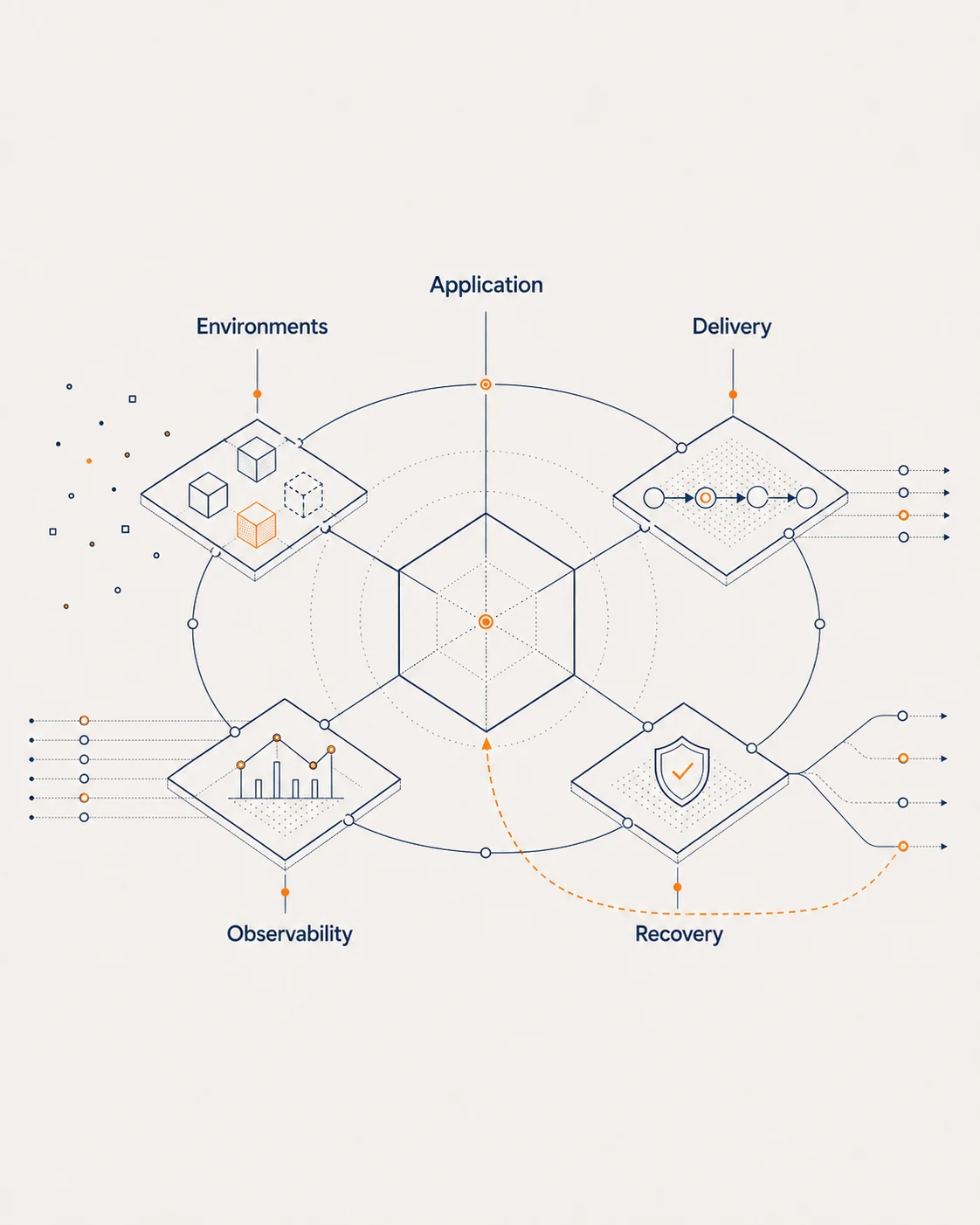
Good fit when
Signals that the platform operating model needs attention
Application growth is exposing architecture or operating constraints.
A migration is being discussed before ownership and recovery are clear.
Decision structure
What needs clarity first?
Workload and data boundary
Identify what belongs together and what must remain isolated.
Delivery and environment model
Define how changes move safely across controlled environments.
Reliability and observability
Decide what must be visible before a release can be trusted.
Ownership and recovery
Make operating responsibility, rollback and escalation explicit.
Platform path
From workload assessment to operating readiness
- 01
Assess
Map workloads, dependencies, environments and operating constraints.
- 02
Design
Agree the target architecture and release model.
- 03
Enable
Automate approved delivery and environment controls.
- 04
Operate
Review observable evidence, ownership and recovery readiness.
What you receive
Assets that make operation and change more controllable
Outputs depend on the workload boundary, existing environments and approved engineering scope.
- Architecture decision record
- Environment and dependency map
- Delivery automation and release model
- Observability and recovery plan
Operating framework
Connect environments, releases, observability and recovery.
Use the framework to connect application architecture, environments, delivery controls, observability and recovery ownership.
Platform readiness
Make the platform easier to change and operate.
Share the application, environment constraint and operating decision that needs attention.
Discuss your project