
Start with the outcome and decision
A feature list is not yet a product direction. Begin by naming the operating decision, user behaviour or workflow that needs to improve. This gives discovery and delivery one shared reference point.
Describe the current situation, the intended change and the evidence that would make the next investment decision possible. Avoid turning an early ambition into an unsupported performance promise.
Map the critical user journey
Identify the people, entry points, hand-offs, exceptions and approvals inside the journey that matters most. Separate a useful first release from secondary flows that can be learned later.
Include accessibility, content ownership and operational support in the journey conversation. They are part of product readiness, not finishing tasks after development.
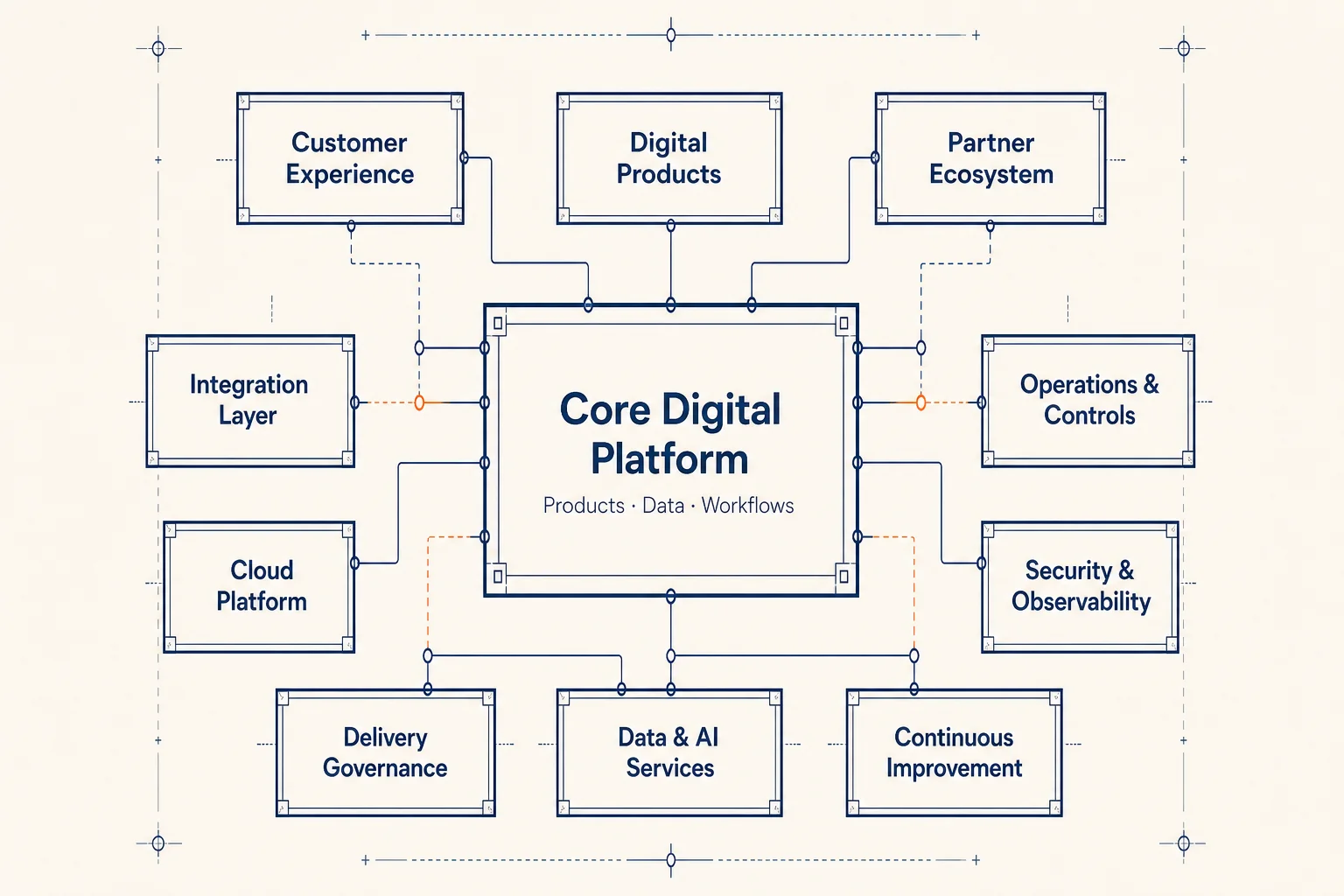
Draw the system boundary
Clarify which capabilities belong in the product, which remain in existing systems and where integrations or data ownership change hands. Record dependencies and prohibited data before architecture is fixed.
A visible boundary helps teams discuss continuity, failure handling, security review and future change without pretending that one diagram is a delivered client architecture.
Define acceptance and ownership
Agree how increments will be demonstrated, tested and accepted. Assign owners for product decisions, technical decisions, content, data, operations and unresolved risks.
Readiness does not mean every detail is known. It means the important decisions, unknowns and acceptance points are visible enough to begin responsibly.